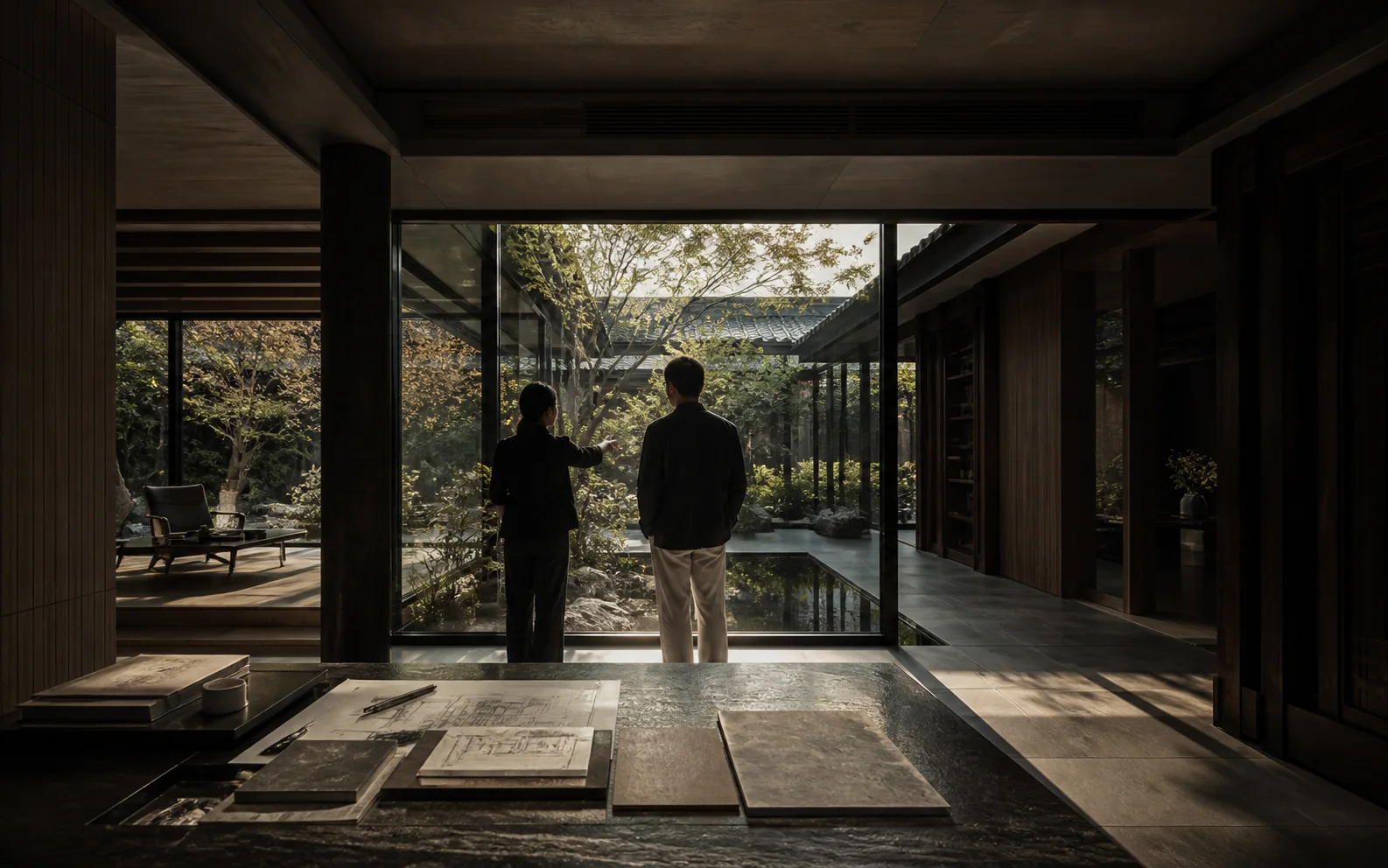
You may be asking
Why do some places make me clear while others leave me irritable and avoidant?
See the situation
Environmental influence often arrives as repeated friction rather than one dramatic feeling: lost objects, lack of privacy, conflicting movement, poor light, or no separation between work and rest.
Each friction appears small, yet repetition changes attention, emotion and relationship. Calling all of it a discipline problem misses the condition.
Return to the root
Environment changes the ease with which behaviour occurs. A sound space supports important action and reduces unnecessary interruption. It cannot guarantee outcomes, but it can reduce waste.
Traditional spatial thought asks about orientation, relationship and order; observation of actual use tests what really happens. Both must return to the people who live there.
Three judgments
Does space support the primary task?
Do work, rest, conversation and solitude have sufficiently clear places?
Does the friction repeat?
A small daily problem often matters more than an occasional discomfort.
Does the change respect the actual user?
Theory does not inhabit space; people do.
A place to begin
- Record the five most repeated spatial frictions for one week.
- Adjust movement, storage, light and noise before reaching for a more complex explanation.
- Consult qualified professionals for structural, safety or major renovation decisions.
Spatial consultation does not replace architectural, fire safety, structural, medical or psychological expertise.
Share this article
Pass it to someone who may need it