Adapted from a real-life story. All people named in this article are pseudonyms.
I|The Dream Was Clearer Than Memory
“JinQuan, I keep dreaming about a place.”
“Where?”
“The old house from my childhood.”
Kevin Lim paused, then sent another line:
“But I can barely remember it anymore.”
Kevin and I have known each other for several years.
He runs a business in Singapore. When we first met, he was facing an important company decision and asked me to help him sort through the gains, losses and risks. After several conversations, the matter gradually found a direction, and we stayed in touch.
At first we talked about business. Later, we also talked about life.
This time, he came to ask about a dream.
He said the sky in the dream was always overcast.
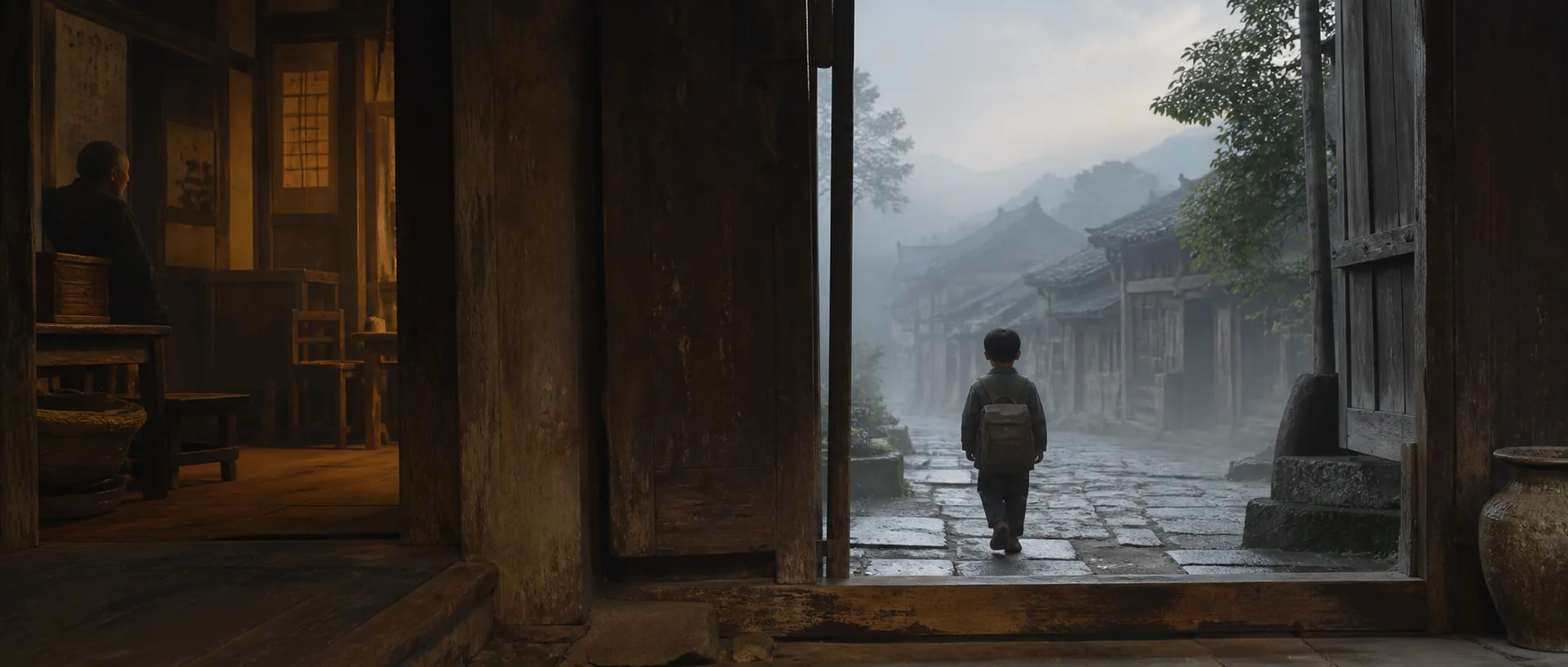
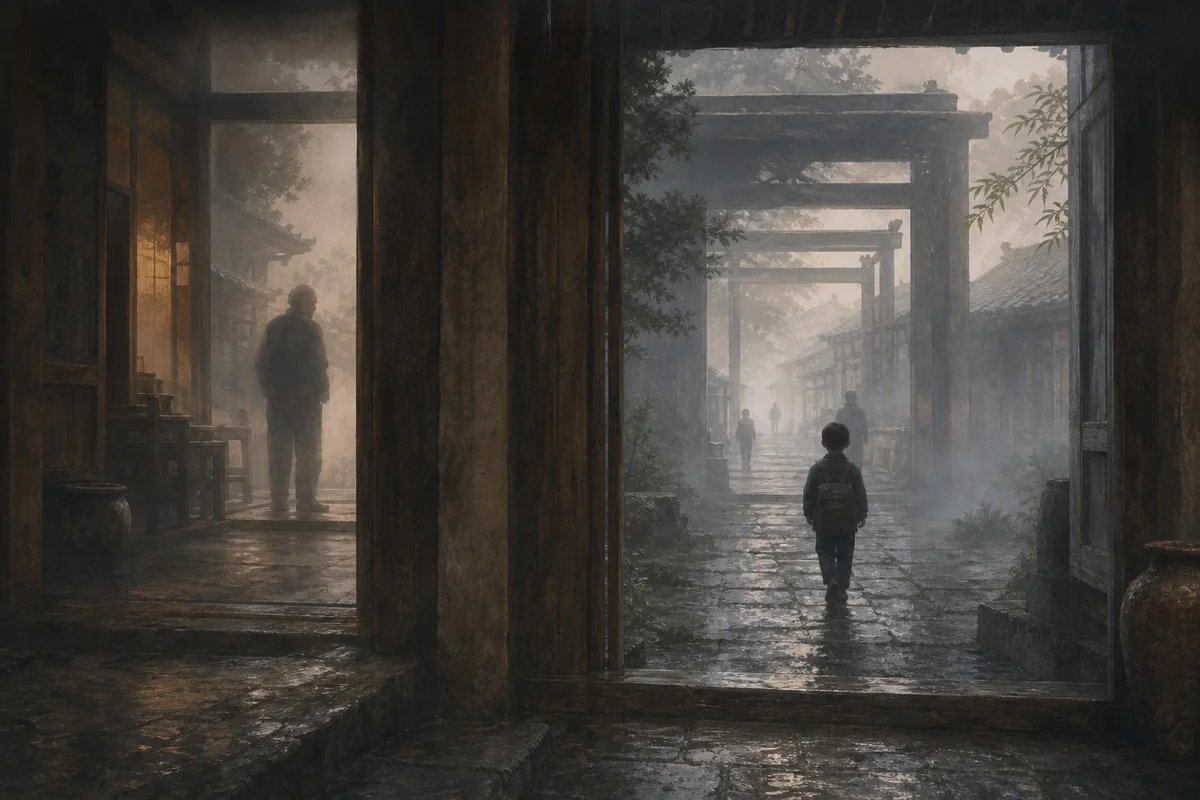
There was no sun and no wind. A low, heavy sky pressed over the old town, and its houses, streets and passers-by were all wrapped in haze.
He ran out of the old house with a schoolbag on his back.
The corridor was long, with threshold after threshold beneath his feet. He ran in a hurry, as though he were about to be late for school.
Once he reached the street, however, the road had changed.
He knew it should have been the road he walked every day as a child, yet no matter where he went, it did not match the old town in his memory.
There were people in the street.
They passed him, but he could not see a single face clearly.
I asked:
“Were you afraid?”
“Not afraid.”
Kevin thought for a moment.
“It felt oppressive. I was anxious, but I did not know what I was anxious about.”
Strangely, the streets and people were blurred, but the old house was exceptionally clear.
In the dream, he knew the colour of the walls, the position of each threshold and the route from inside the house to the street.
After waking, when he tried to recall it, he could no longer remember so much detail.
“My childhood memory of that house was never this clear.”
He said:
“But in the dream, it feels real.”
II|‘After Grandfather Died’
I asked Kevin:
“When did these dreams begin?”
He did not reply for a long time.
Then six Chinese characters appeared on the screen:
“After Grandfather died.”
Kevin's grandfather died suddenly.
That morning, before any news had reached him, nothing unusual had happened at the company, yet he felt inexplicably agitated.
He could not sit still or settle himself.
He said the feeling had no apparent cause, but something seemed to be pressing on his heart.
Then the call from home came.
Grandfather was gone.
Kevin booked a flight home immediately.
A man accustomed to handling pressure and difficult problems cried all the way as he drove to the airport.
“I never imagined I would cry like that.”
He returned to his hometown.
The old town was still there, but many things had changed. There were fewer familiar faces, and the streets were no longer as they had been.
The old house was still there.
Grandfather was not.
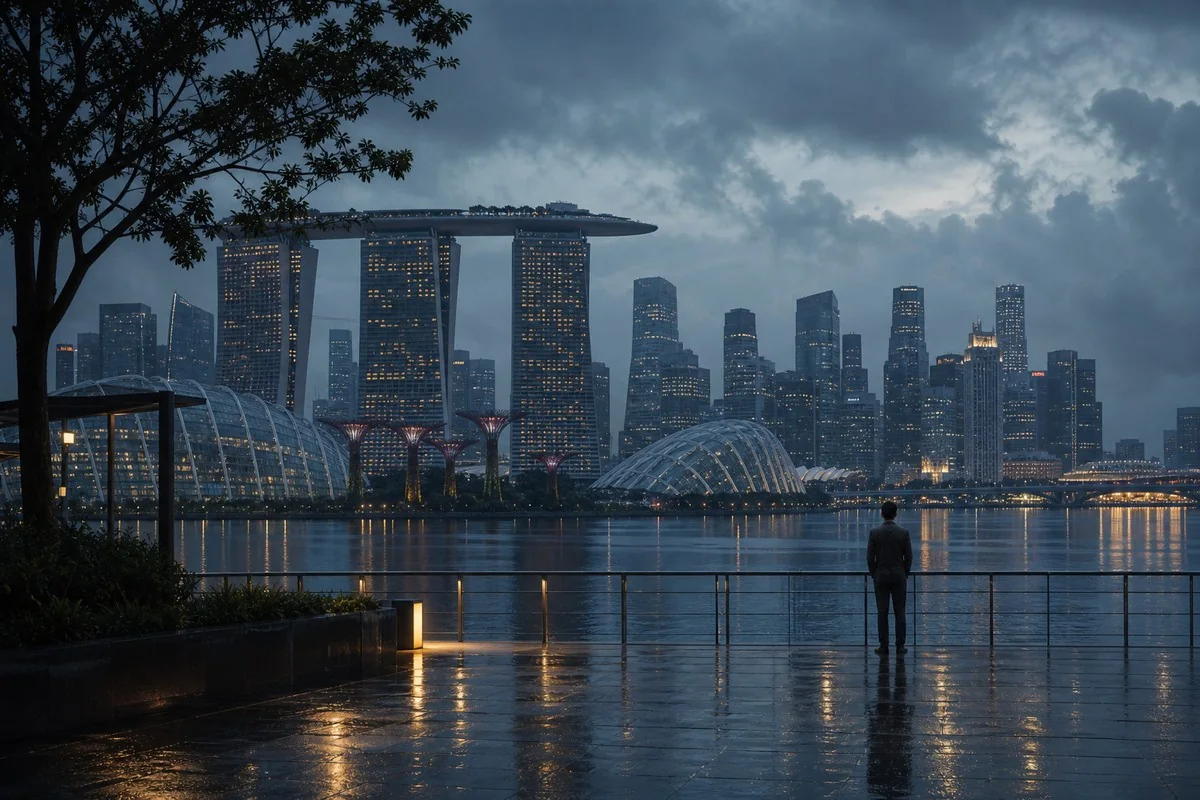
After the funeral, Kevin returned to Singapore. The company continued to operate, and life resumed its usual rhythm.
No one mentioned the agitation he had felt that morning.
But the old house began appearing in his dreams again and again.
III|Later, He Was No Longer Rushing to School
Some time later, Kevin came to me again.
“The dream has changed.”
This time, he was not carrying a schoolbag and was no longer rushing to school.
He was simply wandering through the old town alone.
The sky was still grey. The streets still did not look as he remembered them. Sometimes he entered a narrow lane; sometimes the road led somewhere he had never been.
He had no destination and did not know whom he was looking for.
He simply kept walking.
“Is it the same street every time?” I asked.
“No. It changes every time.”
“What about the people?”
“I still cannot see them clearly.”
“Does the old house change?”
This time, he answered quickly:
“No.”
I went back over everything Kevin had told me about the dreams.
At first, he ran out of the old house, anxious to reach school.
Later, he was no longer in a hurry. He simply walked slowly through different streets.
The streets kept changing.
The faces remained blurred.
Only the old house stayed the same.
I asked him:
“You have walked for so long in these dreams. Have you ever wondered what you are actually looking for?”
Kevin said:
“I don't know.”
After a while, he asked:
“JinQuan, do you think I want to go back?”
IV|What Had We Overlooked?
If what Kevin truly wanted was merely to return to the old town, the familiar streets should have been the clearest part of the dream.
Yet the opposite was true.
The streets changed every time.
The old house was more vivid than his waking memory of it.
I asked him:
“When you walked those streets as a child, did you pay attention to the name of every road or where it led?”
“No.”
“Did you remember every person you passed?”
“No.”
“Then what did you think about every day?”
Kevin thought for a moment.
“School. Going home after school. Eating at home. Going out to play.”
V|Only the Old House Stayed the Same
Perhaps this was what we had overlooked all along.
For Kevin as a child, those streets did not need to be clear.
He did not need to know where a road would eventually lead, or where he himself would go in the future.
He only knew he had to go to school.
After school, he could still go home.
Who the people on the road were did not matter. What the future held had nothing to do with the child he was then.
I told him:
“The blurred people and changing streets in the dream may preserve the way you saw the world as a child.”
“Back then, you only needed to live in the present.”
Kevin said nothing.
I continued:
“Perhaps the old house is more like a symbol. It is not only that building. It is your past, the beginning before everything that came later.”
“Your grandfather was still there. You had not left the old town and did not yet carry all the identities and responsibilities that came later.”
“You were simply a child with a schoolbag on his way to school.”
VI|‘Then What Should I Do?’
From a psychological perspective, unfinished farewells and feelings left unexpressed do not disappear simply because time passes.
We may think they are behind us, yet at a certain moment they can return through memory, emotion or even a dream.
A recurring dream does not necessarily foretell anything.
But for Kevin, at least, the sudden loss of his grandfather had left those feelings without an appropriate place to rest.
In Eastern culture, a person is never entirely separated from where they come from.
The Dao De Jing says:
“The human follows the earth; the earth follows heaven; heaven follows the Dao; the Dao follows what is naturally so.”
We live between heaven and earth. Life comes through our parents and continues within a family. A person may live far from home for many years, but those who raised and accompanied them do not disappear from their life because of distance.
His grandfather's death did not create a new connection.
It simply made the connection that had always existed suddenly visible.
Kevin asked me:
“Then what should I do?”
The Zhongyuan Festival was not far away.
I told him:
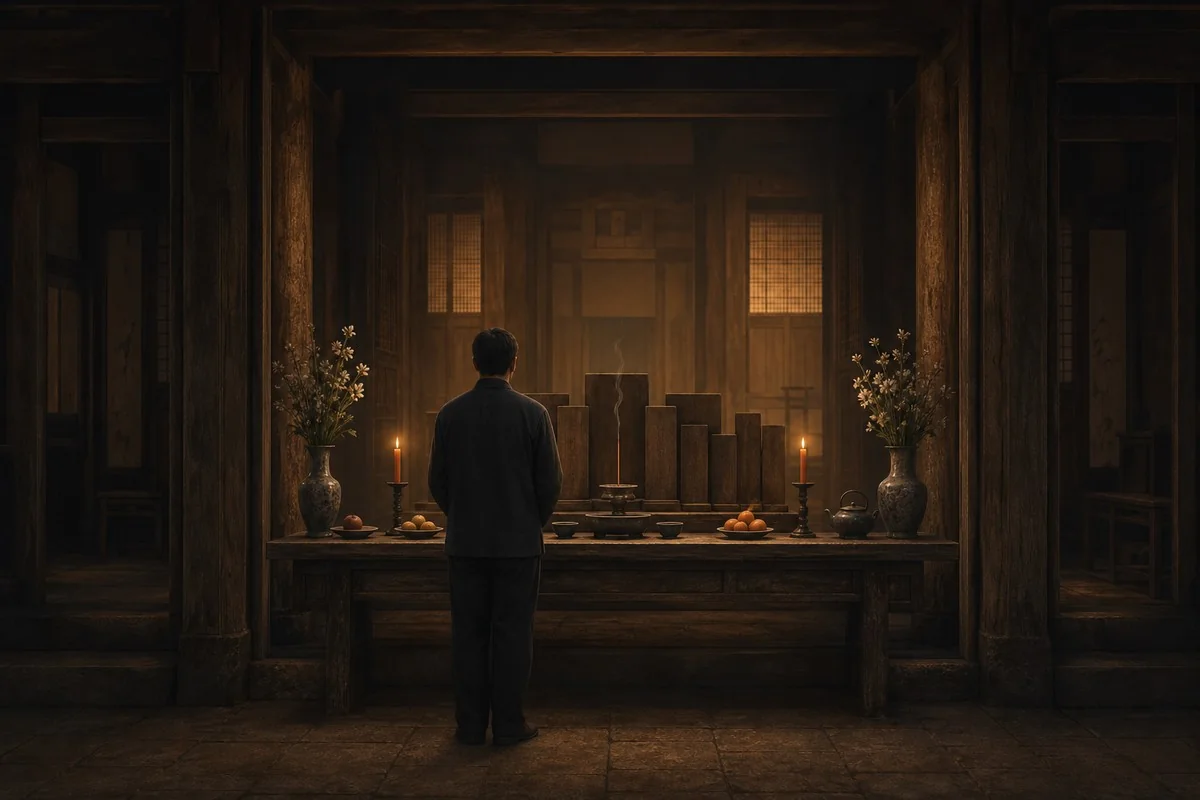
“During the festival, you could hold an ancestor-remembrance rite for your grandfather. Not to change what has already happened. You simply need an opportunity to express, with care, what you remember, what you are grateful for and what you never had the chance to say.”
Kevin was silent for a moment.
“I do not have the conditions to do that here in Singapore, and I would not know how.”
After a pause, he asked:
“Could you help me arrange a properly conducted ancestor-remembrance rite? I truly cannot go back.”
Later, Kevin did not mention the dream again.
But at Qingming and Zhongyuan each year, he continued to contact me and ask me to arrange ancestor remembrance for his family.
I, however, still think of the dream he described.
Under a heavy sky, he runs out of the old house with a schoolbag on his back.
The streets keep changing, and the faces of passers-by remain blurred.
He is hurrying to school.
Back then, Grandfather was still there.
Share this article
Pass it to someone who may need it